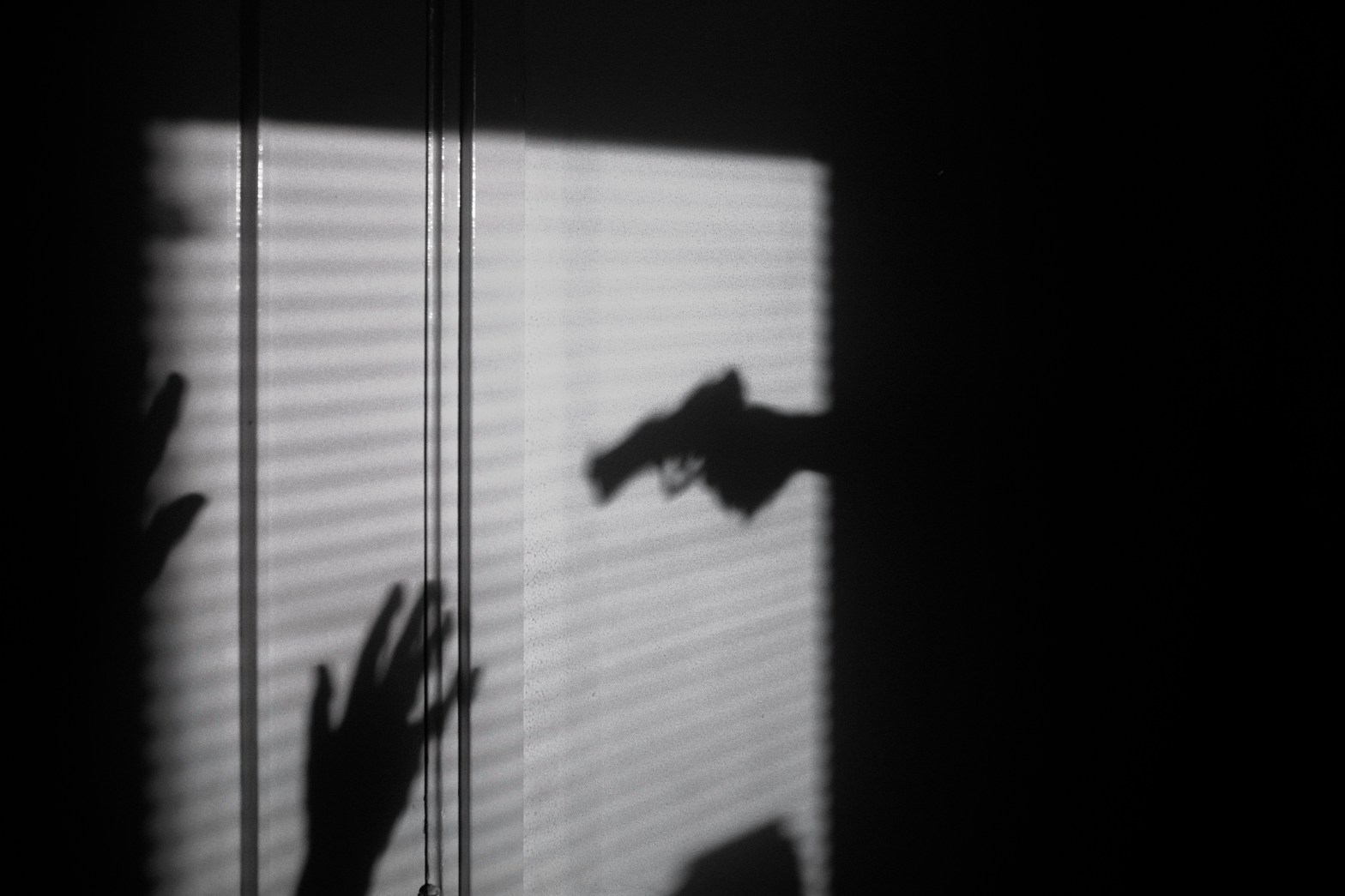
A shooting recently occurred at the hospital where I work. A patient became agitated and barricaded himself inside a bathroom. When security unlocked the door, he rushed them with a handgun and shot one guard in the shoulder. It was just another day in America, and the incident barely made the news.
Sadly, this wasn’t my first encounter with gun violence. Six years before the Columbine murders, a student from my graduating class shot and killed our vice-principal in the hallway at my high school. At that time, it felt like an anomaly, and I never expected something so horrific to become so normalized. Now, experiencing a workplace shooting has become so anticipated that many employees receive annual emails outlining what to do in the event of an active shooter.
I know that I’ve lost a lot of faith in humanity. However, it wasn’t any specific shooting that caused me to feel this way; rather, it was the Covid pandemic that really pushed me over the edge.
I worked as a CT technologist in a hospital throughout the Covid pandemic. Yes, Covid was real. I saw it in lungs that had turned white and opaque, occupying the spaces where air should have been. The earliest cases were the worst. The whole situation was incredibly confusing, and for months, I felt as though I were trapped in a long tunnel with no light shining through.
Yet, what unsettled me most was the silence among my coworkers. Many of them were unwilling to discuss what they were seeing. I felt caught between two realities: one where patients were suffering right in front of me and another where the crisis was dismissed as hysteria. The disconnect was disorienting and left me questioning my own sanity.
Inside the hospital, the situation was always changing. Protocols shifted weekly, and supplies consistently ran low. Patients arrived angry and distrustful, already convinced that the system had failed them. We separated families at the doors and witnessed people dying alone. Meanwhile, those with non-Covid illnesses were pushed aside as the system strained under the pressure. We were called heroes, but I felt more like a sucker thrown to the wolves.
Fear was the common thread in everything. There was fear of infection, fear of speaking openly, fear of stepping out of line. Everyone was told to “trust the science,” but the science was evolving in real time, and the messaging often felt more political than transparent. The slogan “Save Grandma” became a moral rallying cry; however, young people paid a steep price in terms of social, educational, and psychological damage as children were taken out of classrooms and pushed onto screens. The elderly were dying, but the young were unraveling. Yet, we were told that this was the only way forward. Meanwhile, pharmaceutical companies made billions in profits, and taxpayer money flowed into emergency programs and PPP loans. Emergency powers expanded, and dissent split into polarized factions.
What haunts me now is the anonymity of it all. Covid-19 made us all feel expendable. If I had died during that time, no one would’ve recited my name at an annual memorial as they do for the 9/11 victims. The virus transformed the deceased into nameless figures, and society seems to have accepted that we don’t need to know who those individuals were. I hope that the voices of those who died from Covid-19 will one day be heard, and that their words will be compelling enough for us to listen.
What Covid exposed more than anything was our true nature. It revealed our tendencies toward hoarding, greed, tribalism, cruelty, and entitlement. A genuine, unified quarantine could’ve slowed the virus’s spread, but people were unwilling to tolerate it. The government mishandled several aspects of the Covid response, leading many people to lose trust in the system. However, pandemics are inevitable, and there’ll always be another one. I used to believe that a shared crisis would bring people together, but now know that it drives us further apart into small circles of self-preservation.
On CT scans, healthy lungs appear dark because they are filled with air and defined by what isn’t there. During Covid, I watched that darkness completely disappear. I sometimes think about those images I saw. The shocks of violence, loss, and failure no longer pass through me as cleanly. Instead, everything accumulates and settles. From the outside, everything still looks intact and functional, but inside, the space for air, reaction, and recognition is filling up. It feels strange that shooting at my hospital didn’t shock me. I perceive all the violence, mistrust, and institutional failure as mere background noise now. Violence doesn’t surprise me anymore because something deeper has already been damaged. I have grown accustomed to living inside a system that fails miserably and then simply moves on.
My books Memory Road Trip (e-book, paperback) and Time Traveled (e-book, paperback) are both available!
You can reach out to me and apply to be a BETA READER for my latest book, Inner Atlas! Seeking Beta Readers – Literary Travel Memoir – Krista Marson
 Krista Marson
I was just talking to a neighbor (newly met) a retired pediatric surgeon originally from Nigeria who practiced mostly in CA and ended up here somehow. He expressed similar feelings but never once mentioned COVID and I hadn’t thought to bring the subject up.
LikeLike
Collective amnesia, like covid never happened.
LikeLike