
Here’s another installment from my Tucson Festival of Books series.
Three historians—David Daley, Jeffrey Toobin, and Craig Unger—explored key moments in the history of the Republican Party over the past several decades. Their analysis aimed to shed light on the current direction of our country and what we might anticipate for the future. They covered topics such as notable pardons, hidden scandals, the erosion of voting rights, and more.
The discussion on pivotal moments in American history inevitably leads us back to Watergate. At that time, the prevailing belief was that no one was above the law, setting a standard for presidential conduct that feels increasingly distant today.
However, as we look at the contemporary landscape, we see a shift where presidential pardons have morphed into transactional means of exerting power, further complicating the relationship between governance and accountability. The sophistication of gerrymandering, which creates impenetrable “Red walls” in districts once dominated by Democrats, underscores the increasing challenges in our democratic process.
Ultimately, the main takeaway from the lecture was that voters must remain engaged; otherwise, we risk becoming uninformed. However, finding reliable sources of information is becoming a daunting task. With longstanding institutions like Newsweek fading into obscurity and local newspapers nearing extinction, seeking trustworthy news is more vital than ever. The intertwining issues of accountability, power, and information remind us that a well-informed electorate is essential to uphold the principles that ensure justice and equality for all.
I attended a lecture because I wanted to ask Jeffrey Toobin a question. Having read his book about Timothy McVeigh, I was curious if he thought Elon Musk could be considered a new kind of homegrown terrorist. During the Q&A session, I raised my hand and was called on to ask my question. I could hear the crowd audibly gasp as I spoke, and the room fell silent, eager to hear his response. Unfortunately, he answered in an irritated tone, stating, “Listen, Musk isn’t a terrorist because McVeigh actually killed people.” I wanted to respond that Musk’s actions are causing harm, but I wasn’t in a position to follow up with another inquiry.
As I left the lecture hall, someone rushed up to me and asked if I was the one who posed that question. I confirmed that I was, and the woman expressed the same thought I had: “But Musk is killing people.”
Welcome to the new normal, where terrorists no longer wield physical weapons.
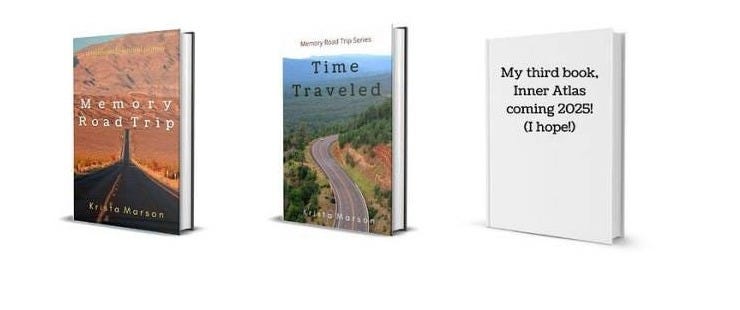
My books Memory Road Trip (e-book or paperback) and Time Traveled (e-book or paperback) are both available! You can also find them at most major international book sites.
 Krista Marson